.png)
SCALEHOUSE GALLERY
Liminal
Gonzalo Benavente
6 de noviembre de 2026 - 22 de enero de 2027
November 6, 2026 - January 22, 2027


Recepciones / Receptions:
-
Viernes 6 de noviembre, de 17:00 a 19:00 / Friday, November 6, 5-7PM
-
Viernes, 4 de diciembre, de 17:00 a 19:00 / Friday, December 4, 5-7PM
Charla del artista / Artist Talk (bilingual!): 18 de diciembre, 17:30 / December 18, 5:30PM Register here
Supported by the Deschutes Public Library
Descripción: Liminal explora los espacios entre identidades, historias, tecnologías y lugares. Lo liminal refiere a aquello que se encuentra en un umbral, donde diferentes tiempos, culturas, materiales e identidades pueden coexistir. La exposición reúne referencias ancestrales y formas contemporáneas de creación, combinando simbolismos precolombinos, papel plegado, escultura en cartón, instalaciones interactivas y nuevas tecnologías para reinterpretar formas del pasado y conectarlas con el presente. A través de estos materiales y procesos, Benavente reflexiona sobre aquello que heredamos y transformamos, y sobre lo que sentimos como propio o ya no nos pertenece. Lo liminal se convierte así en un espacio de posibilidad, donde la memoria puede ser reinterpretada, las identidades pueden evolucionar y lo heredado puede ser cuestionado y reconstruido.
Description: Liminal explores the spaces between identities, histories, technologies, and places. Liminal refers to a state of transition, where places, identities, or times coexist. The exhibition brings together ancestral references and contemporary forms of making, combining pre-Columbian symbolism, folded paper, cardboard sculpture, interactive installations, and new technologies to connect the past with the present. Through these processes, Benavente reflects on the spaces between what is inherited and what is transformed, the everyday and the foreign, and and on what we feel belongs to us or no longer feels like our own. Rather than presenting liminality as a state of uncertainty, the exhibition considers these in-between spaces as places of possibility—where memory can be re imagined, identities can evolve, and new forms of connection can emerge.
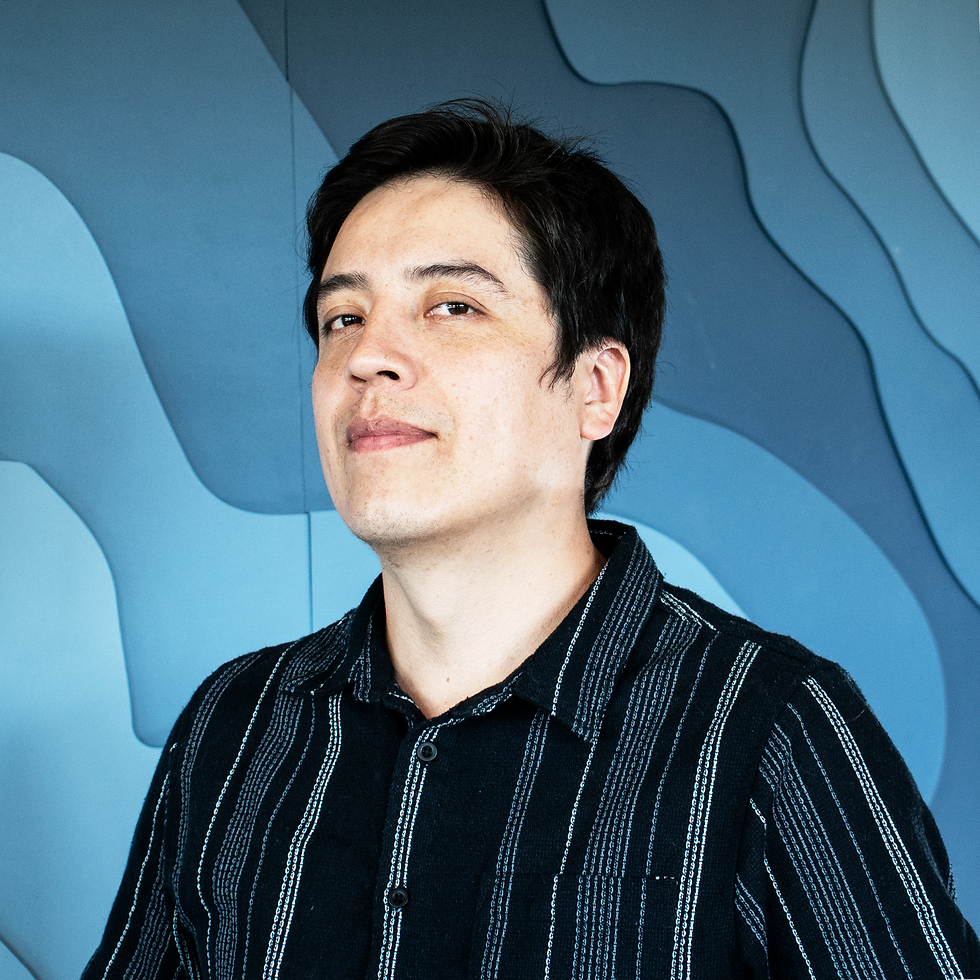
Gonzalo Benavente es un artista de Cusco, Perú, cuya práctica escultórica explora la relación entre la memoria, el patrimonio cultural, la migración y las tecnologías contemporáneas. Egresado de la Escuela Nacional Superior Autónoma de Bellas Artes del Perú, trabaja principalmente con papel plegado, cartulina y cartón, tomando como referencia el origami japonés y las formas de la cerámica precolombina. Su práctica incorpora el escaneo 3D, el modelado digital y la fotogrametría para reinterpretar formas históricas mediante procesos contemporáneos. Es fundador de Orilab, un laboratorio dedicado al plegado y al arte en papel, y autor del libro Origami Escultórico.
About the Artist: Gonzalo Benavente is an artist from Cusco, Peru, whose sculptural practice explores the relationship between memory, cultural heritage, migration, and contemporary technology. A graduate of the School of Fine Arts of Peru, he works primarily with folded paper, cardstock, and cardboard, drawing inspiration from Japanese origami and pre-Columbian ceramic forms. His practice incorporates 3D scanning, digital modeling, and photogrammetry to reinterpret historical forms through contemporary processes. He founded Orilab, a laboratory dedicated to folding and paper art, and is the author of the book Sculptural Origami.
Description: Liminal explores the spaces between identities, histories, technologies, and places. Liminal refers to a state of transition, where places, identities, or times coexist. The exhibition brings together ancestral references and contemporary forms of making, combining pre-Columbian symbolism, folded paper, cardboard sculpture, interactive installations, and new technologies to connect the past with the present. Through these processes, Benavente reflects on the spaces between what is inherited and what is transformed, the everyday and the foreign, and and on what we feel belongs to us or no longer feels like our own. Rather than presenting liminality as a state of uncertainty, the exhibition considers these in-between spaces as places of possibility—where memory can be re imagined, identities can evolve, and new forms of connection can emerge.